
SABR TREATMENT FOR SPINAL METASTASES IN THE UK
Precision Radiotherapy For Cancer That Has Spread To The Spine
A diagnosis of spinal metastases can raise urgent questions about pain, movement, stability and future treatment options. Not every spinal metastasis needs the same approach. Some are best managed with standard radiotherapy, some require surgical review, and some may be suitable for highly targeted SABR.
SABR is considered when there is a clear treatment target in the spine and the surrounding anatomy allows safe delivery. It can be used to treat selected spinal metastases directly, particularly when local control is important and the spinal cord can be protected within accepted dose limits.
Non-Surgical Treatment
Short Outpatient Course
Planned Around The Spinal Cord
WHAT IS PANCREATIC CANCER?
What It Means When Cancer Reaches The Spine
Spinal metastases happen when cancer cells from another part of the body spread to the bones of the spine. They are not the same as primary bone cancer. The original cancer type still matters because it influences treatment decisions, expected response and the wider cancer plan.
The main concerns are pain, spinal stability and whether the tumour is close to the spinal cord or nerve roots. Some spinal metastases can be treated with radiotherapy, including SABR in selected cases. Others need urgent assessment, particularly if there are signs of spinal cord compression.
Common Symptoms Of Spinal Metastases
- Persistent or worsening back pain
- Pain that wakes you at night
- Pain made worse by standing, sitting or movement
- Localised tenderness over the spine
- Pain travelling into the chest, abdomen, arm or leg
- Leg weakness or difficulty walking
- Numbness, tingling or altered sensation
- New bladder or bowel problems
The main types of Spinal Metastases
Vertebral metastases
Epidural spinal metastases
Metastatic spinal cord compression
Paraspinal metastases
cancers that spread to the spine
Spinal metastases occur when cancer that began elsewhere in the body spreads to one or more bones of the spine. The cancer is still named after the original primary cancer, even when it is found in the spine.
The primary cancer type matters because it affects treatment planning, expected response to radiotherapy, drug treatment options and the risk of further spread.
- Breast cancer
- Lung cancer
- Prostate cancer
- Kidney cancer
- Colorectal and other gastrointestinal cancers
- Thyroid cancer
- Melanoma
TREATMENT OPTIONS for Spinal Metastases
What Treatments Are Available For Spinal Metastases
Treatment for spinal metastases depends on where the cancer is in the spine, whether the vertebra is stable, whether there is pressure on the spinal cord or nerves, and how the wider cancer is being managed.
Some treatments focus on controlling pain. Others aim to stabilise the spine, protect nerve function, or treat a limited area of disease directly.
Stereotactic Radiotherapy (SABR)
Stereotactic ablative radiotherapy may be considered for selected patients, particularly where there is a limited number of metastases, good overall prognosis, or a need for focused local control.
Surgery
Surgery may be needed if the spine is unstable, if there is pressure on the spinal cord, or if treatment is needed to prevent or manage neurological decline.
Spinal Stabilisation
Stabilisation may involve surgery or external spinal support, depending on whether the spine is mechanically unstable and whether surgery is suitable.
Systemic Cancer Treatment
Chemotherapy, immunotherapy, targeted therapy or hormone therapy may be used depending on the primary cancer type and the wider disease pattern.
Bone-Strengthening Treatment
Bisphosphonates or denosumab may be used in selected cancers to reduce skeletal complications or help manage bone-related disease.
WHAT IS SABR TREATMENT FOR SPINAL METASTASES
A Focused Way To Treat Defined Spine Tumours
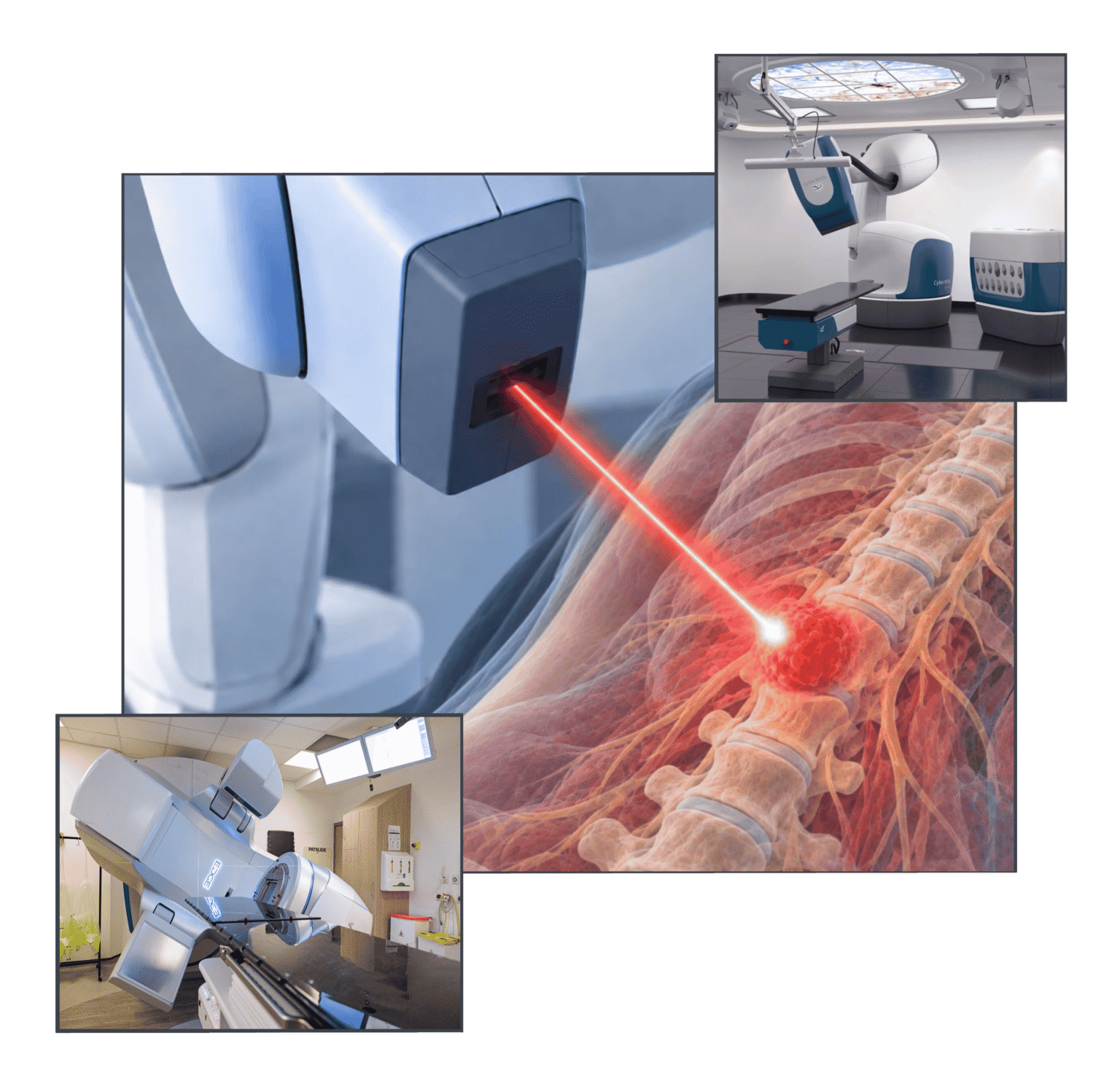
Spinal SABR is a specialised radiotherapy technique used to treat selected cancer deposits in the vertebrae. It is different from standard palliative radiotherapy because it uses a more focused treatment plan and a high level of image guidance to target the affected part of the spine.
This approach may be considered when local control is important, particularly in patients with a limited number of metastases or a good overall prognosis. Before treatment, the team reviews the scan findings carefully to confirm that the spinal cord, cauda equina and nerve roots can be protected within safe dose limits.
- CyberKnife: robotic radiotherapy delivery from multiple treatment angles
- Linear Accelerator (Linac): image-guided radiotherapy shaped around the spinal target
- MR-Linac: MRI-guided planning and delivery where suitable
THE BENEFITS OF SABR FOR SPINAL METASTASES
A Precise Option For Selected Spinal Metastases
The spine is a sensitive area to treat because small differences in tumour position can matter. A spinal metastasis may be close to the spinal cord, nerve roots or cauda equina, which means treatment has to be planned with a high level of accuracy.
SABR is used only in selected spinal metastases, but it can be valuable when a precise local treatment is needed. It may be reviewed for pain control, progression in one spinal site, or limited metastatic disease, provided the target can be treated safely.
- High-Precision Planning
- Short Treatment Course
SABR is usually completed in fewer visits than standard radiotherapy.
- No Surgical Recovery
Treatment does not involve an incision, general anaesthetic or inpatient recovery.
- Same-Day Treatment Visits
Most patients attend for treatment and return home the same day.
- Protects Critical Structures
Dose limits are set to reduce risk to the spinal cord and nearby nerves.
- Pain Relief Where Appropriate
Radiotherapy can help improve pain caused by spinal metastases.
Is SABR Right for You
When SABR For Spinal Metastases Fits The Treatment Plan
SABR for spinal metastases is not chosen from the spine scan alone. It is considered alongside the primary cancer, current drug treatment, symptoms, spinal stability, prognosis and whether there are other active areas of disease.
For some patients, SABR may help treat a specific spinal metastasis while systemic treatment continues. For others, standard radiotherapy, surgery, steroids, stabilisation or supportive care may be more appropriate.
- You Have Limited Metastatic Disease
- One Spinal Site Is Progressing
- The Cancer Type Needs Strong Local Control
- The Spine Has Been Treated Before
- Surgery Has Already Taken Place
After spinal surgery, radiotherapy may be used once recovery allows, particularly when local control is still important.
- The Treated Area Is Clearly Defined
SIDE EFFECTS OF SABR FOR SPINAL METASTASES
What You May Feel After SABR Sessions for Spinal Metastases
Some people feel little change during spinal SABR itself. The treatment is painless while it is being delivered, but side effects can appear over the following days or weeks as the treated area reacts to radiation.
One recognised short-term effect is a pain flare, where pain temporarily worsens before settling. Your team may discuss medication to help manage this if you are at risk.
Short-Term Effects
- Temporary pain flare
- Fatigue for several days or weeks
- Local tenderness in the treated area
- Temporary inflammation around the treated vertebra
- Swallowing discomfort if the upper spine is treated
- Loose stools or nausea if the lower spine is treated
Longer-Term Effects
- Fracture or collapse of a weakened vertebra
- Persistent pain requiring further assessment
- Nerve root irritation or radiculopathy
- Rare radiation injury to the spinal cord
- Late skin colour change or sensitivity
- Need for spinal review if stability changes
If you have insurance, your insurer may need clinical details before approving SABR. Checking early can help avoid delays.
- AXA
- BUPA
- WPA
- Aviva
- Vitality
- Cigna
- Time To Decide
- No Hidden Fees
- Klarna Accepted
- Video Consultation
- Scan Review
- Treatment Scheduling
SABR treatment PAYMENT OPTIONS
Understanding The Cost Of SABR For Spinal Metastases
You are already managing enough decisions without uncertainty around treatment costs. Whether you are using private health insurance, self-funding or travelling for care, you should know what is involved before treatment begins.
Costs are discussed after your consultation, once your case has been reviewed and your recommended SABR treatment plan has been confirmed.
Getting started
Your Pathway To SABR Treatment for Spinal Metastases
Whether you are exploring SABR after a new recommendation, after previous treatment, or because surgery is not the right route, the process begins with a careful review of your diagnosis, scans and treatment history.
Can I stay on my cancer medication during spinal SABR?
Can SABR treat more than one spinal metastasis?
Can SABR be used if I have already had radiotherapy to the spine?
How quickly does spinal SABR work?
Will SABR remove the spinal metastasis completely?
Frequently Asked Questions
We Know You Have Questions. Here Are The Honest Answers.
When you are facing cancer treatment, every question matters. The answers below cover what patients most often ask us, but they are only a starting point.
If you are unsure about anything, our team will take the time to understand your situation, explain things clearly and help you feel more informed about your options.
Speak to the Team
Connect With Our Clinical Team
Whether you have a specific question or simply want to understand your options, our team will provide clear guidance and an honest assessment of what treatment could look like for you.
You can reach us by filling in the contact form or calling us directly.