
SABR FOR LIVER CANCER IN THE UK
Targeted Treatment For Primary And Secondary Liver Cancer
Whether your cancer started in the liver or spread there from elsewhere, the next decision is which treatment gives you the best chance of controlling it.
SABR targets liver tumours with a concentrated, high-precision dose of radiotherapy. For primary liver cancer, it’s an option when surgery, transplant or ablation aren’t suitable. For liver metastases, it can treat a small number of confined deposits, often from colorectal cancer.
We assess your imaging, liver reserve and treatment history before advising whether SABR is right for you.
For local and advanced cases
1 to 5 treatment sessions
Outpatient treatment
WHAT IS LIVER CANCER?
Understanding Your Liver Cancer Before Treatment Starts
Primary liver cancer develops from cells within the liver, usually against a background of existing liver disease such as cirrhosis or chronic hepatitis infection. How much healthy liver tissue remains often determines which treatments are safe to use.
Liver metastases are different. They originate from cancer elsewhere in the body, commonly the bowel, and reach the liver through the bloodstream. The underlying liver is often otherwise healthy, which can open up more treatment options.
Knowing which situation you’re in, and how many tumours are involved, is the starting point for working out whether SABR has a role.
Common Symptoms Of Liver Cancer
- Swelling or discomfort in the upper abdomen
- Unexplained weight loss or loss of appetite
- Persistent fatigue
- Nausea or feeling full quickly after eating
- Itchy skin
- Swelling in the legs or abdomen (fluid build-up)
- Yellowing of the skin or eyes (jaundice)
Types Of Primary Liver Cancer
Hepatocellular Carcinoma (HCC)
Intrahepatic Cholangiocarcinoma
Secondary (Metastatic) Liver Cancer
Types Of Secondary Liver Cancer
- Bowel cancer
- Breast cancer
- Lung cancer
- Pancreatic cancer
- Kidney cancer
- Neuroendocrine tumours
LIVER CANCER TREATMENT OPTIONS
Treatment Choices For Primary And Secondary Liver Cancer
Stereotactic Radiotherapy (SABR)
Delivers concentrated, high-dose radiotherapy to a liver tumour while protecting the surrounding tissue. Used when surgery isn't possible for primary disease, or to treat a small number of liver metastases, usually over three to five sessions.
Liver Resection
Surgical removal of the tumour along with a margin of healthy tissue. Considered when the disease is limited in extent and enough functioning liver would remain after the operation.
Liver Transplantation
Replacing the whole liver, considered for selected patients with early-stage primary disease where cirrhosis or extensive damage means resection wouldn't leave enough healthy liver.
Ablation (Radiofrequency Or Microwave)
Heat delivered through a fine needle destroys small tumours directly, typically used for tumours under 3cm when surgery isn't the preferred route.
Transarterial Therapies (TACE Or Radioembolisation)
Chemotherapy or radioactive particles delivered directly through the blood vessels feeding the tumour, combined in TACE with blocking its blood supply. An option for primary disease confined to the liver but unsuitable for surgery.
Systemic Drug Treatment
Targeted therapies and immunotherapy acting throughout the body, used when disease extends beyond what local treatment can address.
WHAT IS SABR TREATMENT FOR LIVER CANCER
SABR Radiotherapy Targets Liver Tumours Without Open Surgery
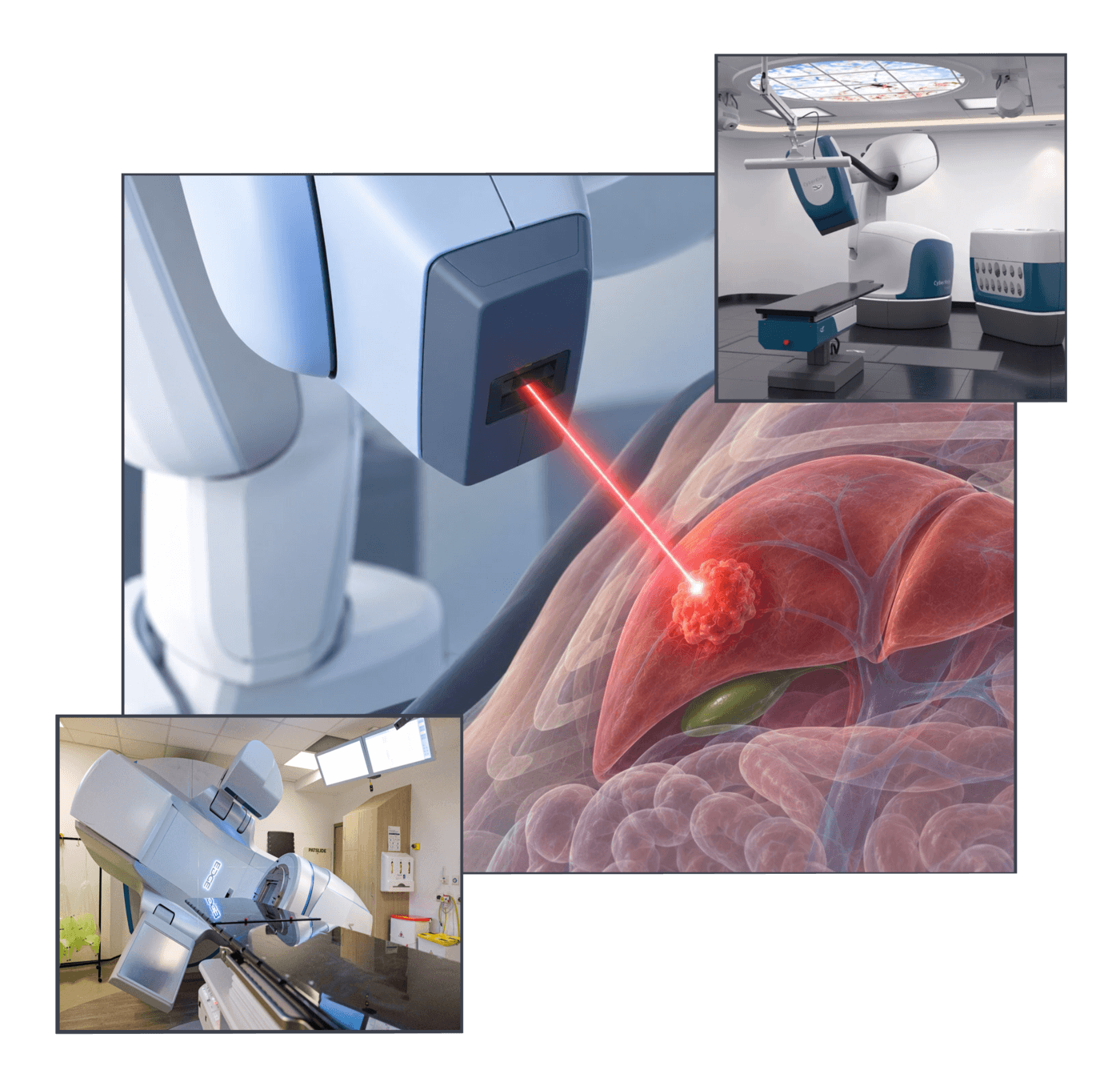
SABR delivers a high, tightly focused dose of radiation to a liver tumour over a small number of sessions, aiming to control or destroy it while limiting exposure to the healthy liver around it.
It can treat primary liver cancer that isn’t suitable for resection or transplant, or a small number of liver metastases from cancers such as bowel or breast cancer.
Because the liver moves with breathing, treatment planning tracks this movement closely so the dose stays on target throughout each session.
Liver SABR is delivered using one of the following systems:
- CyberKnife: uses robotic guidance to compensate for liver motion during treatment
- Linear Accelerator (Linac): delivers high-energy radiation shaped precisely to the tumour
- MR-Linac: combines radiotherapy with real-time MRI guidance
THE BENEFITS OF SABR FOR LIVER CANCER
SABR Treats Liver Cancer With Millimetre Precision
Liver cancer treatment isn’t only about what happens to the tumour. It’s also about how much of your daily routine you get to keep during and after treatment.
SABR radiotherapy treats liver tumours from outside the body, using a focused, high dose of radiation shaped precisely around the area being treated. For primary liver cancer, it offers a route to treatment when surgery isn’t possible. For liver metastases, it can target a small number of tumours confined to the liver, often alongside treatment for the cancer that caused them.
Whether SABR is right for you depends on your liver function, the number and position of any tumours, and your previous treatment. We review this in detail before recommending anything.
- Outpatient Treatment
- No General Anaesthetic
- Minimal Time Off Work
- Suitable For Patients Unfit For Surgery
- Fits Around Existing Treatment
- Planned Around Your Case
Is SABR Right for You
Six Signs SABR May Be Worth Discussing For Liver Cancer
- Your Tumour Involves The Portal Vein
- You're Waiting For A Liver Transplant
- Ablation Wasn't Possible Due To The Tumour's Size Or Position
- You Have A Small Number Of Liver Metastases From Bowel Cancer
- Your Cancer Is Progressing In One Area While Treatment Controls The Rest
- You Want A Specialist Opinion Before Accepting "No Further Treatment"
POSSIBLE SIDE EFFECTS OF LIVER SABR
How Your Body May Respond In The Weeks After Liver SABR
Most patients tolerate liver SABR well, but it’s worth understanding upfront what can happen, both immediately and further down the line. The severity and type of effect usually depends on tumour location and how much of your liver’s total volume falls within the treatment area.
These are the effects your team will talk you through beforehand:
Common, Early Effects
- Fatigue lasting one to two weeks
- Mild nausea, more likely for tumours near the stomach or bowel
- Loss of appetite for a short period after treatment
Less Common, Liver-Specific Effects
- Temporary rises in liver enzymes on blood tests
- Radiation-induced liver disease, an uncommon risk linked to treated liver volume
- Irritation of nearby structures, such as the bowel, if close to the treatment area
- AXA
- BUPA
- WPA
- Aviva
- Vitality
- Cigna
- Clear Pricing
- Time To Decide
- Klarna Accepted
- Video Consultation
- Treatment Planning
- Scheduling Support
LIVER CANCER TREATMENT AND PAYMENT OPTIONS
Getting Clarity On Cost Before You Commit To Anything
Cost and access shouldn’t be unclear at a time when you’re already weighing enough decisions. Whichever route applies to you, insured, self-funding, or arranging treatment from outside the UK, you’ll know what’s involved before agreeing to anything.
Costs and payment are discussed with you directly after your consultation, once we know exactly what treatment is being recommended.
WHAT HAPPENS NEXT
A Careful Route From Assessment To Follow-Up
Can SABR be used after previous liver surgery or ablation?
How soon will scans show whether liver SABR has worked?
Scan changes are not always immediate. A treated liver tumour may shrink, remain stable or show treatment-related changes before the response becomes clear.
Follow-up imaging is usually interpreted over time rather than from one scan alone. Blood tests and symptoms may also help build the wider picture.
Can the same liver area be treated again with SABR?
Re-treatment is sometimes possible, but it is more complex. The previous dose to the liver and nearby organs must be reviewed before any further treatment is considered.
In some cases, another course may be unsafe. In others, it may be possible with careful planning and a clear reason for doing it.
What happens if SABR is not suitable?
If SABR is not the safest option, the team should explain why. The reason may be liver function, tumour position, number of tumours, disease elsewhere in the body or the risk to nearby organs.
That does not mean there are no options. It means another route may be more appropriate, such as surgery, ablation, SIRT, TACE, drug treatment or monitoring, depending on the case.
Do I need a biopsy before liver SABR?
Not always. Some liver tumours can be diagnosed from imaging and clinical history, especially when the pattern is clear.
A biopsy may be needed if the diagnosis is uncertain, if the result would change treatment, or if the team needs more information before recommending SABR. This is decided individually.
Frequently Asked Questions
We Know You Have Questions. Here Are The Honest Answers.
When you are facing cancer treatment, every question matters. The answers below cover what patients most often ask us, but they are only a starting point.
If you are unsure about anything, our team will take the time to understand your situation, explain things clearly and help you feel more informed about your options.
Speak to the Team
Connect With Our Clinical Team
Whether you have a specific question or simply want to understand your options, our team will provide clear guidance and an honest assessment of what treatment could look like for you.
You can reach us by filling in the contact form or calling us directly.