
What is SABR radiotherapy
Stereotactic Ablative Radiotherapy: A Precise, Non-Surgical Treatment for Primary and Metastatic Cancer
When you are told you have cancer, every decision can feel urgent, especially when you are trying to understand what treatment options may still be available.
SABR is a non-surgical form of precision radiotherapy used for selected primary and secondary cancers. For many people, it may offer an alternative to surgery. For others, it can be used alongside existing treatment to target visible areas of cancer directly.
Before any decision is made, we look carefully at your scans, previous treatment and the wider picture of your care. That allows us to understand whether SABR may be an appropriate option for you.
Millimetre-accurate treatment
CT, PET and MRI imaging help map each tumour precisely before treatment begins.
No surgery or hospital stay
Treatment is non-invasive. There are no incisions or general anaesthetic, and appointments are usually outpatient.
Only 1 to 5 sessions
Most patients complete treatment in days, rather than the weeks required for conventional radiotherapy.
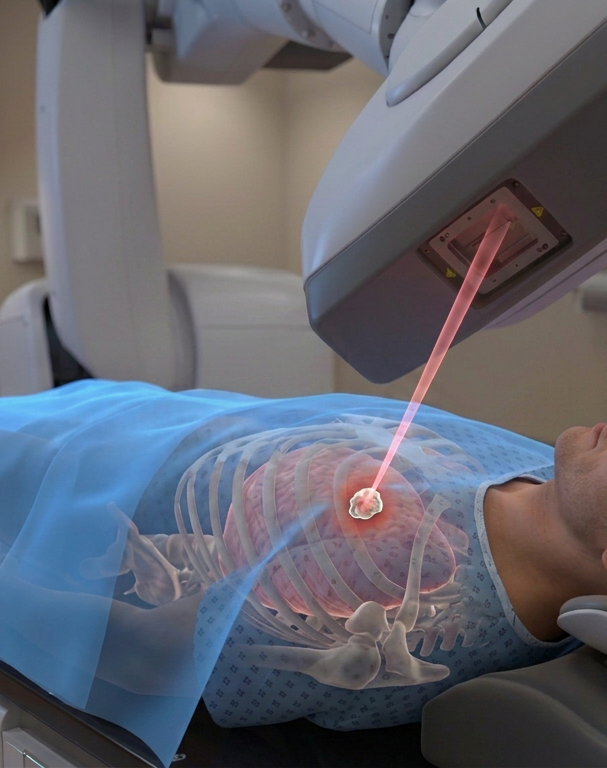
Understanding SABR radiotherapy
How SABR radiotherapy treats cancer directly
SABR makes it possible to target selected tumours with exceptional accuracy, offering a non-surgical way to treat cancer directly.
SABR, or Stereotactic Ablative Radiotherapy, is an advanced form of radiotherapy used to treat selected primary tumours and secondary cancer sites with a high degree of accuracy. It may also be referred to as stereotactic radiotherapy or SBRT (Stereotactic Body Radiotherapy).
Treatment is planned from detailed imaging that shows the precise size, shape and position of the tumour, as well as the healthy organs around it. This allows the team to deliver a high dose of radiotherapy to the cancer itself while limiting exposure to surrounding tissue.
The term “ablative” reflects the intention of the treatment: to deliver a dose strong enough to destroy tumour cells in the area being treated. Unlike conventional radiotherapy, which commonly uses lower doses over a longer course, SABR is delivered over fewer, more focused sessions.
Planning and delivery
How your SABR treatment is planned and delivered
No two patients are the same. Before a single session of radiotherapy is delivered, our team builds a treatment plan that is designed entirely around you, your anatomy, and the precise location of your cancer.
SABR is not a standard protocol applied the same way to every patient. It is a highly personalised process that begins with detailed imaging, moves through careful dosimetric planning, and ends with treatment delivered to millimetre accuracy. Every decision, from the number of sessions to the angle of each beam, is made with your specific situation in mind.
For most patients, the process from first scan to first treatment is managed efficiently and without unnecessary delay. You will not spend months waiting for treatment to begin, and you will not spend months in hospital receiving it.
What you will have, at every stage, is a team that knows your case in detail and a clear picture of what comes next.
Detailed imaging
CT, PET and sometimes MRI scans show the exact location of the cancer and its relationship to nearby organs.
Personalised planning
The treatment team designs a plan around the tumour, taking care to reduce radiation to healthy tissue.
Targeted delivery
Radiation beams are shaped and directed at the target with millimetre accuracy.
The Advanced Technology Used To Deliver SABR Treatment
SABR is only as precise as the technology delivering it. The machines used to plan and deliver stereotactic radiotherapy have advanced significantly over the past decade, and the choice of which to use matters.
Not every situation calls for the same equipment. Where your tumour is located, how it moves with your breathing, and how close it sits to surrounding structures all influence which system will deliver your treatment most accurately. That decision is made by your clinical team before a single session begins.
Three systems are used to deliver SABR, each with distinct capabilities. Understanding what each one does, and why it might be chosen for your treatment, is part of knowing what to expect.
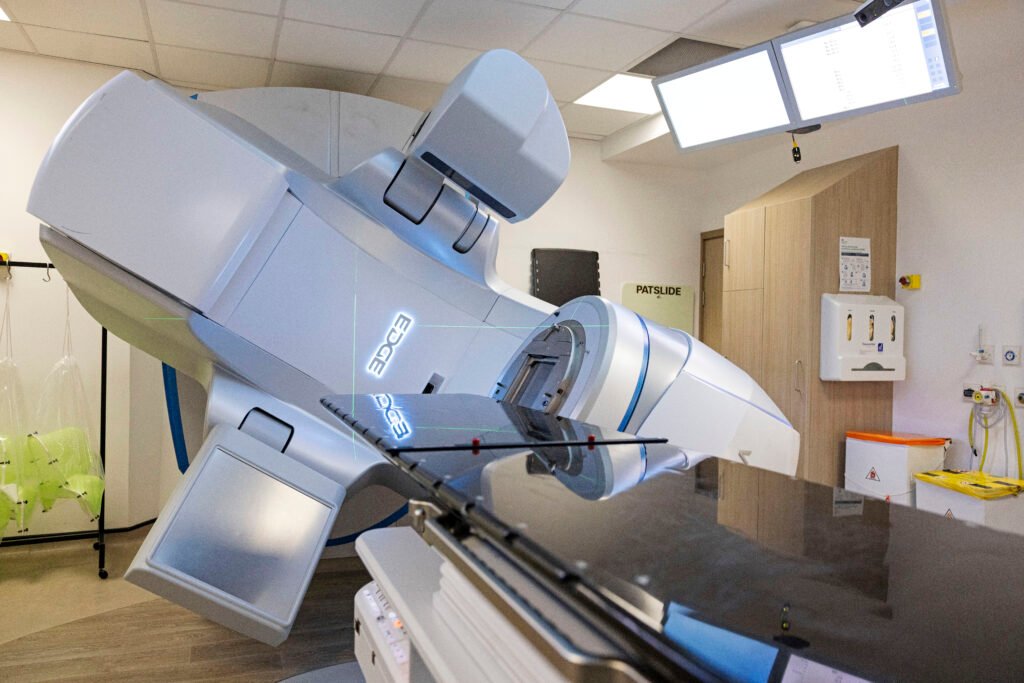
Linear Accelerator (Linac)
The most widely used radiotherapy machine in the world, and the workhorse of modern SABR delivery. High-energy beams are shaped to match the precise contours of the tumour and delivered with speed and accuracy. Used across a broad range of tumour types and locations.
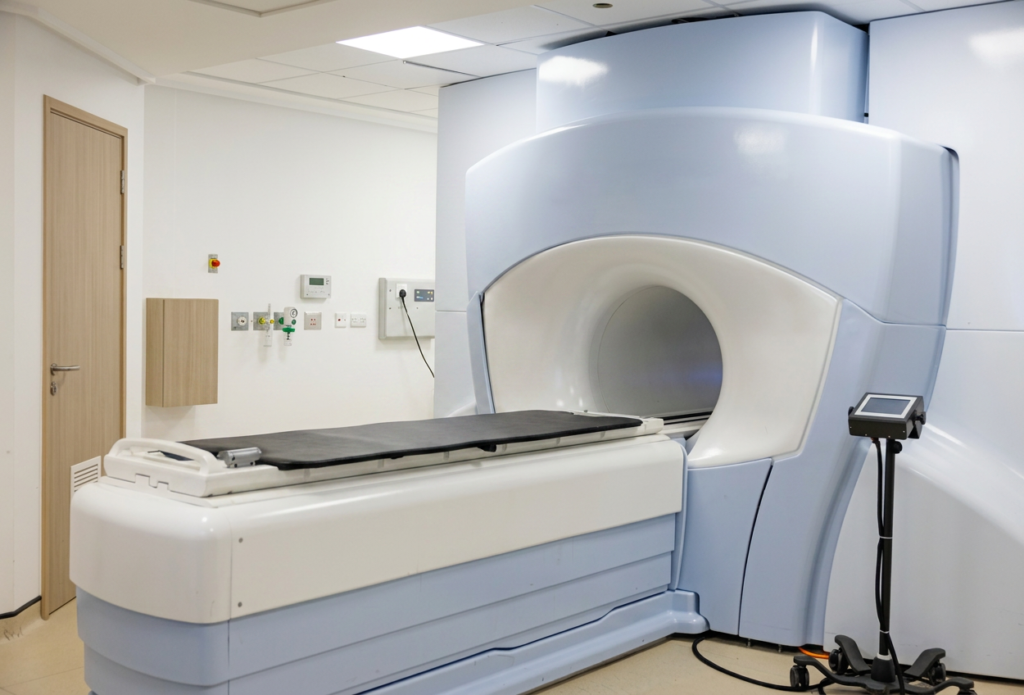
MR-Linac
A linear accelerator combined with a real-time MRI scanner, allowing the clinical team to see the tumour as it is being treated. This level of live imaging guidance is particularly valuable for tumours that sit close to sensitive structures or shift position between sessions.
MR-Linac
A linear accelerator combined with a real-time MRI scanner, allowing the clinical team to see the tumour as it is being treated. This level of live imaging guidance is particularly valuable for tumours that sit close to sensitive structures or shift position between sessions.
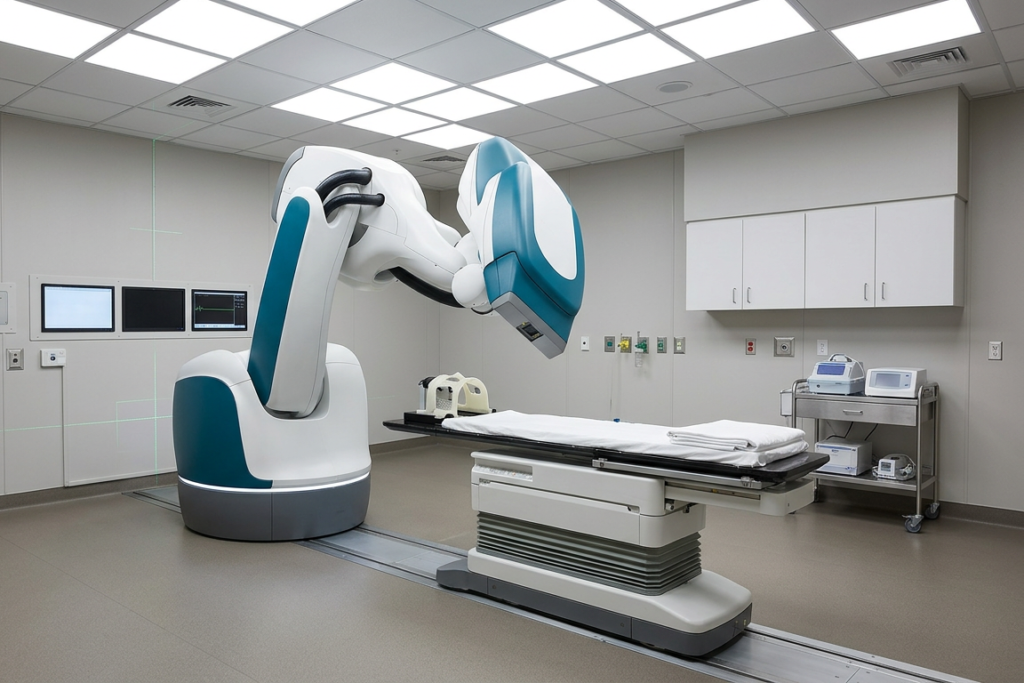
CyberKnife
A robotic radiotherapy system that delivers radiation from hundreds of different angles, tracking the tumour’s position in real time throughout each session. Particularly well suited to tumours in complex or hard-to-reach locations, and to patients where breathing movement needs to be continuously accounted for.
WHEN is SABR CONSIDERED?
Is SABR Radiotherapy the right treatment for you?
SABR is not a treatment for every patient or every situation. It works best when the cancer is limited, well-defined, and targetable with precision. The clearer the boundaries of the disease, the more effectively stereotactic radiotherapy can be aimed at it.
There are several distinct situations where SABR is considered, and understanding which one applies to you is the starting point for any conversation about treatment.
Early-stage lung cancer, where surgery is not an option
For patients with selected early-stage tumours, SABR can treat the cancer with the same intent as an operation. Age, general health, or other conditions sometimes make surgery too risky.
In those cases, SABR offers an alternative that does not require a general anaesthetic, a hospital stay, or a lengthy recovery. Outcome data is comparable to surgery for carefully selected patients.
Stage four cancer that has spread to a limited number of sites
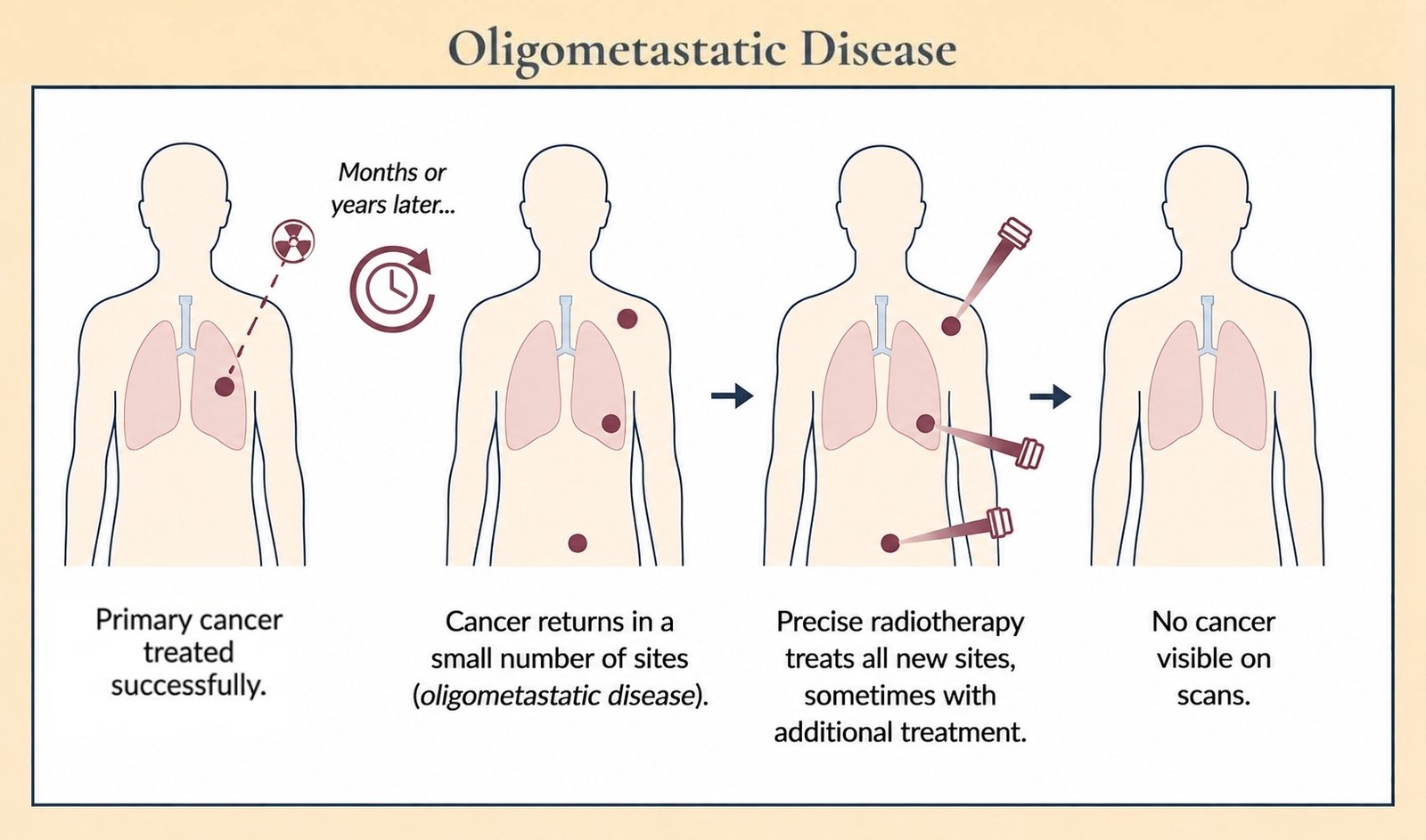
When cancer has spread, but only to a small number of locations, typically one to five, this is known as Oligometastatic Disease. Rather than treating the whole body with chemotherapy, SABR can target each site individually, with the aim of eradicating all visible disease.
Some patients treated in this way have remained disease-free for more than five years. It is not typical for every patient, but it represents what precision treatment can achieve in the right situation.
One or two sites progressing while everything else is stable
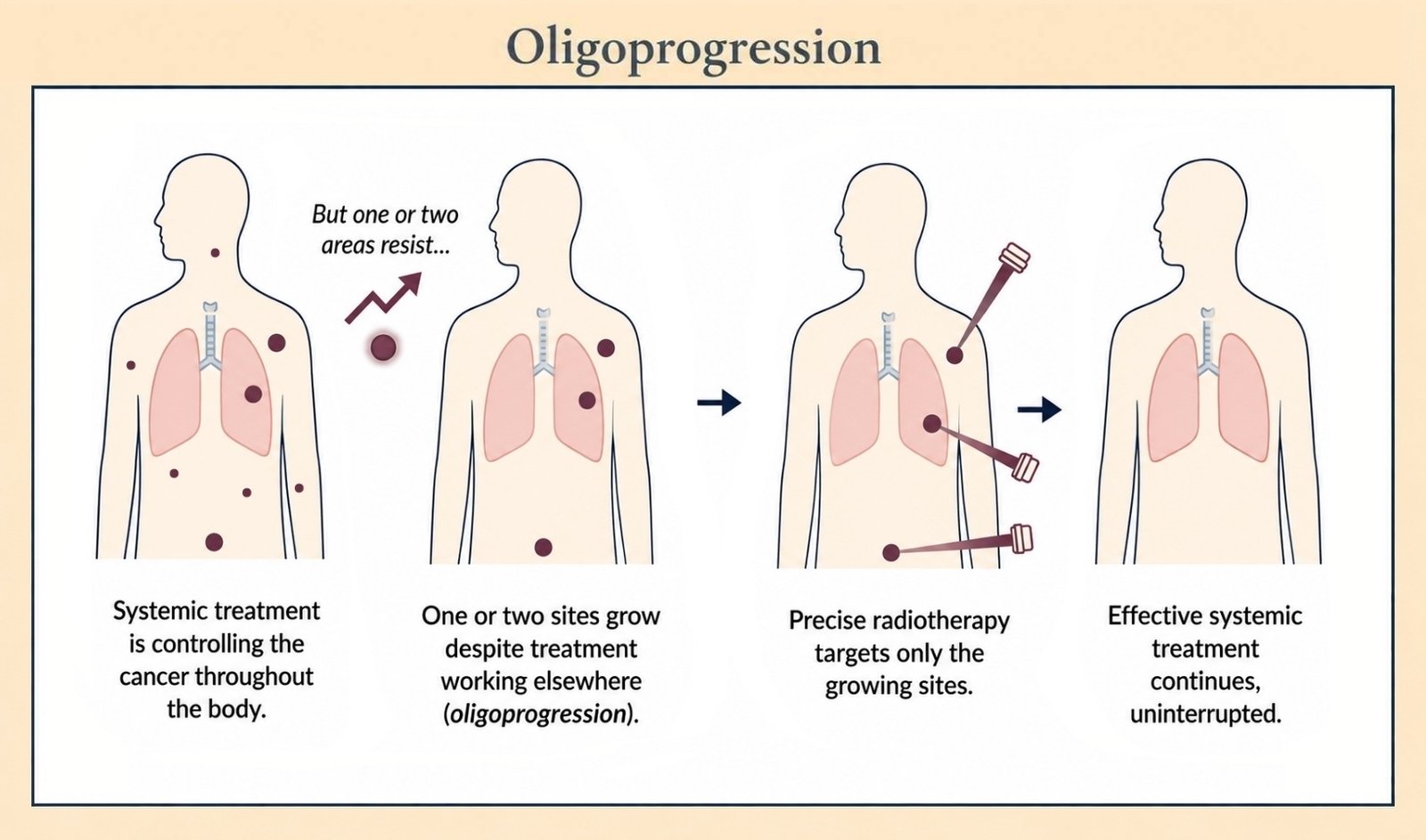
This is called Oligoprogression. Your current treatment is working almost everywhere, but one or two spots have found a way to escape control. Rather than abandoning a treatment that is otherwise effective, SABR can target just the progressing areas, allowing you to stay on what is working for longer.
This is particularly relevant for patients on targeted therapies or immunotherapy who are otherwise responding well.
Cancer near structures that cannot be safely operated on
Some tumours sit too close to the heart, spine, major airways, liver, or other critical structures to be removed surgically without significant risk. SABR’s precision means the radiation dose can be concentrated on the tumour itself, while the surrounding tissue receives only a fraction of the exposure.
Locations that might previously have been described as untreatable can, in many cases, be safely targeted.
Secondary lung cancer from another primary site
Cancer that has spread to an organ, such as the liver, bone, lymph nodes, or lung, from a primary cancer elsewhere in the body, such as the breast, bowel, kidney, or prostate, can in the right circumstances be treated with SABR. If the number of metastases is limited and they are well-defined on imaging, each site can be targeted individually with the aim of clearing all visible disease.
When chemotherapy is no longer effective
If your current systemic treatment has stopped controlling the disease, SABR can sometimes be used to treat the active sites while your clinical team determines the next step. This can provide a period of disease control without immediately moving to a more intensive drug regimen.
SABR is most effective when the decision to use it is made at the right moment, in the right clinical context, and for the right patient. A detailed review of your imaging, your treatment history, and your overall health is needed before any recommendation can be made.
What we review before recommending SABR
The decision to recommend SABR is based on a detailed assessment of your specific situation, not a standard checklist. Here is what that assessment covers.
- The location and number of tumour sites
- How the tumour behaves with movement
- Your previous treatment history
- How your current treatment is performing
- The proximity of the tumour to critical structures
- Your lung function and general health
- Current imaging: CT, PET or MRI
- Stage and origin of the cancer
Not sure whether your situation fits?
Bring your recent scans, clinic letters or treatment summary. We will look at the full picture before giving advice.
Cancer Types treated with SABR
Precision treatment across many types of cancer
Not every cancer responds the same way to the same treatment. SABR is suited to a broad range of primary tumours and metastatic disease, and for many of our patients, it has provided a route forward when other approaches had reached their limit.
Lung cancer
Precise, non-surgical treatment for early-stage lung cancer and lung metastases, completed in as few as five sessions.
Prostate cancer
Treats primary prostate cancer and metastatic spread with curative intent, without surgery or prolonged treatment courses.
Liver cancer
Targets primary liver tumours and metastases with millimetre accuracy, including where surgery is not a safe option.
Kidney cancer
A targeted option for primary kidney cancer and metastatic renal cell carcinoma, including for patients with a solitary kidney.
Colon cancer
Treats primary colorectal/bowel/colon cancer and metastatic spread with precision and minimal side effects.
Pancreatic cancer
A precisely targeted treatment for locally advanced or inoperable pancreatic cancer, where surgery is not possible.
Spinal Metastases
Treats cancer that has spread to the spine with pinpoint accuracy, protecting the surrounding nerves and healthy tissue.
Bone Metastases
Targeted treatment for cancer that has spread to the bones, helping to control disease and preserve quality of life.
Adrenal Metastases
Reaches adrenal metastases with precision, treating a location that surgery often cannot safely access.
Brain Metastases
A highly focused dose delivered to brain metastases with millimetre accuracy, preserving the surrounding healthy brain tissue.
Lymph Metastases
Targets cancerous lymph nodes precisely, treating metastatic spread before it has the chance to progress further.
A useful comparison
How is SABR different from standard radiotherapy?
SABR and conventional radiotherapy both use radiation to treat cancer, but the way that treatment is planned and delivered can be very different. Understanding these differences can help you make sense of why one approach may be recommended over the other, and what to expect if SABR is right for your situation.
Why Choose SABR Radiotherapy
The Benefits of Stereotactic Ablative Radiotherapy
When you are told your cancer has spread, or that an operation is not possible, it can feel as though the decisions have already been made for you. They have not.
SABR is an advanced, highly targeted form of radiotherapy, and for some patients it changes what is possible, not by promising more than it can deliver, but by treating disease with an accuracy that was simply not available in years past.
Here’s what makes it worth considering:
- Fewer Treatment Visits
Most patients complete SABR in just 1 to 8 sessions, rather than the daily appointments over weeks that conventional radiotherapy involves.
- Back to Normal Sooner
Because there is no surgery involved, most people resume their usual routine within a few days of finishing treatment.
- Millimetre-Level Accuracy
CT, PET and MRI scans allow the treatment team to shape radiotherapy precisely around the shape of each tumour.
- Less Impact on Healthy Tissue
The tumour receives a high, concentrated dose while the tissue surrounding it is exposed to far less radiation.
- Control Rates of Up to 95%
In carefully selected patients, SABR achieves control of treated lesions in up to 95% of cases, one of the strongest results among cancer treatments.
- Suitable for Hard-to-Reach Tumours
SABR can treat cancer close to the heart, spine, liver, brain and major airways, sites where surgery often carries too much risk.
Setting realistic expectations
What SABR cannot promise
Hope should never come at the cost of honesty. Before considering SABR, it matters that you understand what it can realistically achieve, and where its limits lie.
Here is what we want you to know:
- Not every cancer or every tumour location is suitable for treatment
- Serious side effects are uncommon but possible. What the risks are for you will be discussed before starting a treatment plan
- It may need to work alongside chemotherapy or other systemic treatment
- Long-term control is possible for most patients, but a cure cannot be promised
None of this is a reason to assume SABR is not for you. It simply means the answer depends on your individual situation, and that is exactly what a consultation is for.
If you want a straight answer about whether SABR fits your situation, we are ready to have that conversation.
Your SABR treatment process
How SABR treatment works, from consultation to recoveryr
If you are considering SABR radiotherapy, it helps to know exactly what to expect. Here is how the process works, step by step, from your first enquiry through to follow-up care.
Reach us directly by phone, email, or the enquiry form on this page. A member of our team will be back in touch within one working day to arrange your first appointment.
Your consultation can be in person or by video call. The specialist reviews your scans and history, explains your options, and gives you a clear view on whether SABR is right for you.
Further scans, such as CT, PET or MRI, are arranged where needed, giving the team a precise picture of the disease before planning begins.
Your plan is mapped precisely to your tumour’s exact position, size and movement, then carefully reviewed by our full clinical team before treatment is scheduled.
Sessions are brief, outpatient, and painless, usually one to five depending on your plan. Most patients go home unaided right after each appointment.
After treatment, scheduled scans track your response. Our team stays reachable between appointments, and continues to liaise with your oncology team.
Getting ready for treatment
Preparing for your first SABR session
Knowing what to expect before your first session often does more to ease anxiety than anything else.
Here is how preparation actually unfolds, from planning to the day itself.
What happens before the first session?
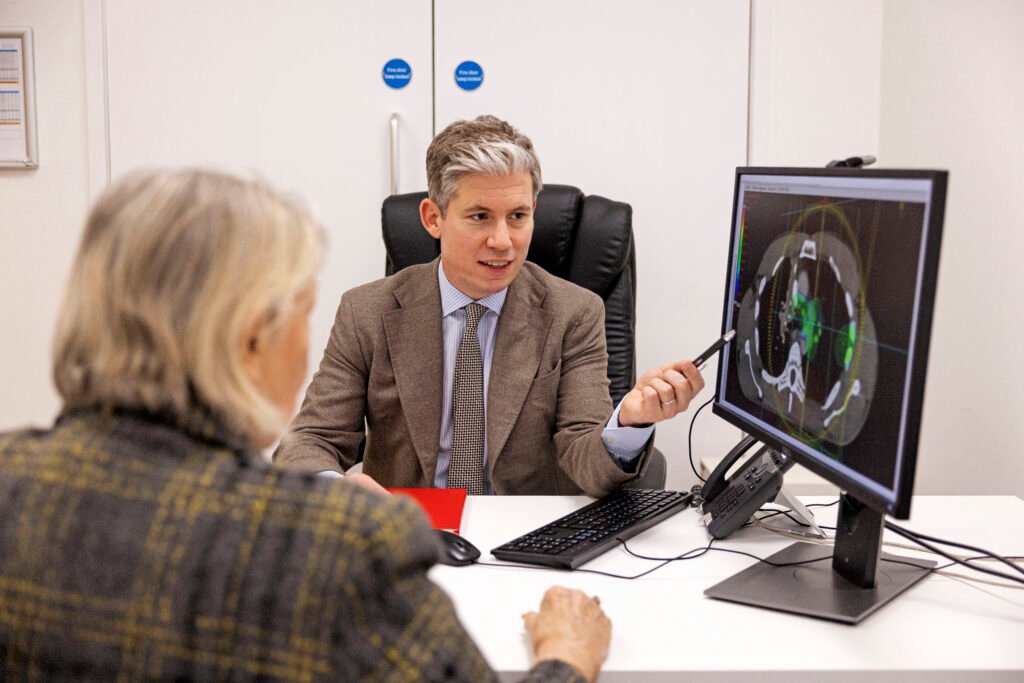
Before treatment begins, you’ll come in for a separate planning visit. A scan is taken to map the tumour’s exact position, which gives our team everything they need to design your treatment around it.
This appointment tends to run longer than any single treatment session. That’s simply because the accuracy of everything that follows depends on getting this stage right.
Understanding your treatment plan
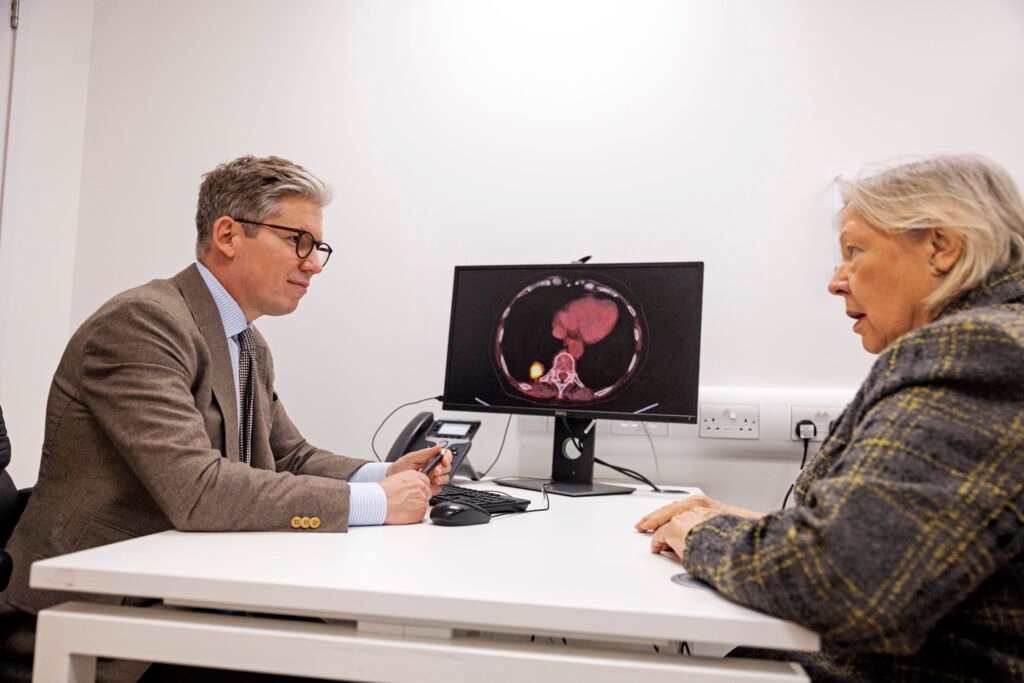
Once your scan is complete, our clinical team works out how to shape and angle the radiation so it reaches the tumour precisely while sparing the tissue around it.
You won’t need to be present for this. It usually takes a few days, and your specialist will confirm everything is ready before your first treatment date is booked in.
Getting ready at home
There’s no need to change much in the run-up to your appointment.
A few simple things are worth keeping in mind:
- Take your usual medications unless told otherwise
- Eat and drink normally, unless your team has asked for something specific
- Ask about any instructions for your particular treatment area, such as breathing guidance for chest or lung treatment
- Get in touch if anything is unclear beforehand
Most people carry on as normal until their appointment. Save any questions for your specialist rather than trying to work things out on your own.
Arriving for treatment
On the day, you’ll be settled comfortably onto the treatment couch. A quick scan checks that everything matches your plan before treatment starts, with small adjustments made if needed.
The treatment machine moves around you, but nothing touches you, and you won’t feel anything during delivery. All you need to do is stay still and relaxed. First sessions run a little longer than the ones after, simply because of these initial checks.
Managing anxiety before treatment
If you’re feeling nervous ahead of your first appointment, you’re not alone. It’s usually the unknown that causes the most worry, not the treatment itself.
A conversation with your care team beforehand can take away much of that uncertainty. During the session, small things help too, playing music, or focusing on your breathing, can keep you relaxed while treatment is underway.
And once that first appointment is done, most people are pleasantly surprised by how straightforward the rest of the process feels.
A few practical tips
Wear something loose and comfortable
Give yourself extra time for your first visit
Bring along any letters or information you've been sent
Arrange a lift if you'd rather have company on the way home
Risks and safety
What side effects can SABR cause?
SABR is designed to limit exposure to healthy tissue, which is why most patients find the side effects mild and short-lived. It’s still worth knowing what’s possible, so nothing catches you off guard.
Common side effects
For the majority of patients, side effects are minor and pass within a couple of weeks. The most common are:
- Tiredness, usually settling within a week or two after treatment
- Mild soreness or irritation in the treated area, similar to a light sunburn
- Discomfort around the treated site, generally manageable with everyday painkillers
- Nausea, though this is uncommon and mainly linked to treatment near the stomach
Side effects by treatment area
Because SABR targets a small, specific area, the side effects you experience relate closely to that location:
- Treatment near the brain can bring on a mild headache or tiredness
- Treatment in the lungs may cause a slight cough or breathlessness for a short time
- Treatment near the liver can sometimes lead to nausea or minor digestive changes
- Treatment near the spine may cause a temporary flare in pain before settling
Serious side effects
Because SABR concentrates radiation so precisely, the risk of more significant complications is low. Careful planning around vital organs and detailed imaging beforehand both play a part in keeping that risk down. Most patients recover well within days, without disruption to any other treatment they’re continuing alongside SABR.
Ongoing support
Any side effects you do experience will be reviewed at your follow-up appointments, alongside scans that track how the treated area is responding. If something feels different to what you were told to expect, our team is reachable between visits, not just at scheduled check-ins.
Concerned about how SABR might affect you specifically?
Life After SABR
After SABR treatment: what happens next
Finishing your sessions isn’t the end of the process. It’s when the treatment does most of its work, and when staying on top of your recovery matters most.
Weeks 1-2
The first few weeks
SABR doesn’t work instantly. Cancer cells are damaged during treatment, but they only stop growing gradually. Feeling much the same at first is normal, not a sign anything is wrong.
Ongoing
Your follow-up schedule
Your first check-up is usually within a few weeks. After that, appointments space out, with CT and sometimes PET or MRI scans tracking how the treated area responds.
Interpretation
Reading your scans over time
The treated area doesn’t always shrink right away, and can look inflamed early on. That’s why your team reviews several scans over time, not just one.
Side Effects
Managing side effects as they arise
Side effects are reviewed at each follow-up. Most settle within a few weeks, though a few can appear later depending on where you were treated, which is why regular monitoring matters.
On Track
When things are going to plan
Monitoring simply continues, often without further treatment. This is one of SABR’s real strengths: controlling specific areas of disease while the rest of your plan carries on uninterrupted.
If Uncertain
If something needs a closer look
Not every change on a scan is a setback. Where something is unclear, the next step is usually more imaging or a wider team discussion, so decisions rest on a pattern, not one result.
Continuity of Care
A consistent specialist throughout
Reading a scan accurately means understanding your treatment and timing. The same specialist following your case means decisions are always made with the full picture in view.
Want to know what your own follow-up plan will look like?
Do I need a referral from my GP to book a consultation?
No. You can contact us directly, and our team will arrange your consultation without requiring a referral first.
How quickly can I have a consultation?
Most enquiries are reviewed within one working day, and consultations can often be arranged within 48 hours, whether in person or by video call.
Will SABR interfere with treatment I'm already having?
Not usually. SABR is frequently used alongside chemotherapy, immunotherapy or targeted drug treatment, and can sometimes help you stay on a treatment that’s already working by dealing with specific progressing areas.
How will I know if the treatment has worked?
Response is assessed through follow-up scans over time, since SABR’s effects build gradually rather than appearing immediately. Your specialist will explain what to expect for your specific case.
Will the same specialist oversee my whole treatment?
Yes. Continuity matters for interpreting your results accurately, so your case is followed by a consistent specialist throughout, from consultation through to follow-up care.
Frequently Asked Questions
We Know You Have Questions. Here Are The Honest Answers.
There is no such thing as the wrong question when you are facing a cancer diagnosis. Here are the questions we are asked most often, but do not let that limit you.
If something is on your mind, reach out to us whenever you feel ready. We will take the time to go through your situation with you, answer every question honestly, and make sure you leave the conversation with a clearer picture of what is possible.
Speak to the Team
Connect With Our Clinical Team
Whether you have a specific question or simply want to understand your options, our team will provide clear guidance and an honest assessment of what treatment could look like for you.
You can reach us by filling in the contact form or calling us directly.