
SABR TREATMENT FOR ADRENAL METASTASES IN THE UK
A Focused Radiotherapy Option For Cancer That Has Spread To The Adrenal Glands
Finding that cancer has reached an adrenal gland raises immediate questions about what can be done and whether treatment at that site makes clinical sense. The answer is not always straightforward, but for the right patient it can be meaningful.
SABR is used in selected cases to treat adrenal metastases directly, without surgery. This page explains when it may be appropriate and what the assessment process involves.
Non-Surgical Alternative
SABR offers an alternative to adrenalectomy without the need for surgery or general anaesthetic.
Short Outpatient Course
Treatment is typically completed across a small number of planned outpatient sessions.
Compatible With Systemic Treatment
SABR can be delivered without stopping ongoing drug therapy such as targeted treatment or immunotherapy.
WHAT ARE ADRENAL METASTASES?
Understanding Adrenal Metastases Before Exploring Treatment
Adrenal metastases develop when cancer cells from a primary tumour travel through the bloodstream and settle in the adrenal glands. The cancer is still named after where it originated. It is managed as part of the wider metastatic picture, not as a separate adrenal condition.
Because the adrenal glands have a substantial blood supply, they are susceptible to metastatic seeding from a range of cancers. Lung cancer is the most frequently associated primary, though kidney, breast, colorectal and melanoma are also well-recognised sources.
Many adrenal metastases are found incidentally during staging scans, before any symptoms have developed.
Common Symptoms Of Adrenal Metastases
- Upper abdominal or flank discomfort on the affected side
- Back pain without a clear musculoskeletal cause
- Reduced appetite or unexplained weight loss
- Nausea unrelated to treatment
- Persistent tiredness or low energy
- Dizziness or low blood pressure, particularly if both glands are affected
- No symptoms in a significant proportion of patients
Adrenal metastases are frequently asymptomatic. Any new abdominal or flank symptoms in someone with a cancer diagnosis deserve prompt assessment rather than being attributed to other causes.
The main types of Adrenal Metastases
Synchronous Metastasis
Discovered at the same time as the primary cancer diagnosis, during initial staging imaging. This is a common presentation, particularly in lung cancer.
Metachronous Metastasis
Develops after the primary cancer has already been diagnosed and treated. It may appear months or years later on routine surveillance imaging.
Unilateral Metastasis
Cancer has spread to one adrenal gland only. This is the more common presentation and is often identified on routine staging imaging before any symptoms develop.
Non-Functional Metastasis
The most common type. The metastasis does not disrupt adrenal hormone production and causes no endocrine symptoms.
Cancers That Spread To adrenal glands
The adrenal glands are a recognised site of spread for several primary cancers. When cancer reaches the adrenal glands, it retains the identity of its origin and is managed accordingly.
Knowing the primary cancer type matters because it shapes how the metastasis behaves, what local and systemic treatment options are available and how urgently intervention needs to be considered.
- Lung cancer
- Kidney cancer
- Breast cancer
- Colorectal cancer
- Melanoma
- Gastric cancer
- Oesophageal cancer
TREATMENT OPTIONS FOR adrenal METASTASES
What Treatments Are Available For adrenal Metastases
Treatment for an adrenal metastasis depends on the primary cancer type, the number of sites involved, whether adrenal function is affected and where this fits within the wider treatment plan. Several options exist, and more than one may be appropriate at different points in the disease course.
Stereotactic Radiotherapy (SABR)
A focused, non-surgical radiotherapy option delivering precise high-dose treatment to the adrenal metastasis over a small number of sessions, without incision or general anaesthetic.
Conventional Radiotherapy
A lower-dose radiotherapy course used primarily to control symptoms such as pain. Delivered over more sessions than SABR and focused on palliation rather than durable local control.
Adrenalectomy
Surgical removal of the affected adrenal gland. Considered in selected patients with limited metastatic disease and good performance status when local control is a treatment priority.
Systemic Therapy
Chemotherapy, immunotherapy, targeted therapy or hormone therapy directed at the primary cancer type. Often the main treatment when adrenal disease is part of broader metastatic spread.
Active Surveillance
Regular imaging to monitor a small, stable adrenal metastasis without immediate intervention. Appropriate when the lesion is asymptomatic and not driving disease progression.
Corticosteroid Replacement
Not a treatment for the metastasis itself, but essential when bilateral adrenal involvement causes insufficient cortisol production. Managed alongside any local or systemic treatment.
WHAT IS SABR TREATMENT FOR ADRENAL METASTASES
A Targeted Radiotherapy Approach For The Adrenal Glands
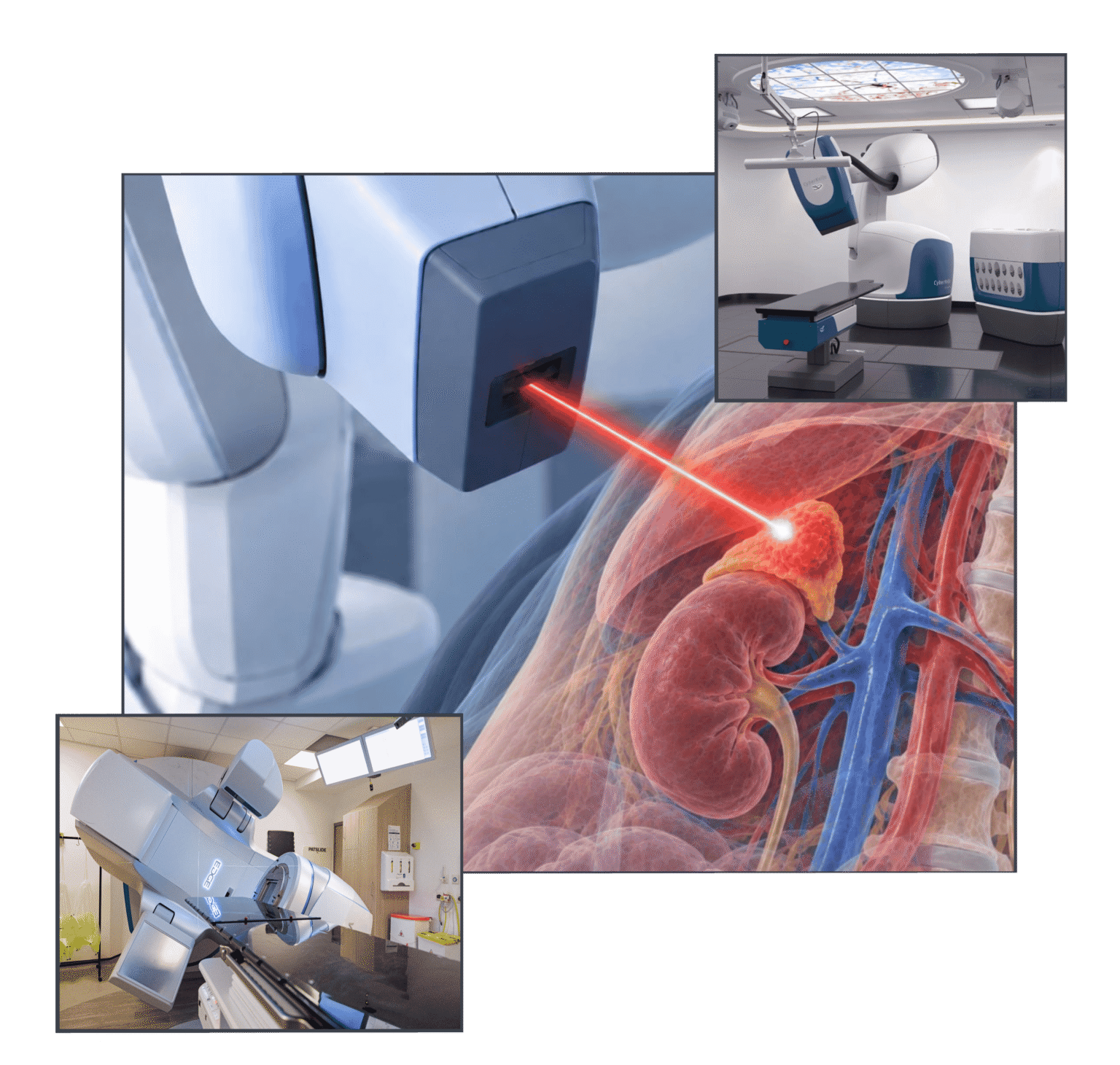
SABR delivers a precise, high-dose course of radiotherapy directly to the adrenal metastasis, using detailed imaging to shape the dose around the tumour while protecting the kidney, liver and surrounding abdominal structures.
Because the adrenal glands move with breathing, treatment planning accounts for this motion to ensure the dose remains accurately directed throughout each session.
SABR is used when local control of the adrenal metastasis is clinically important and the anatomy allows safe delivery.
- CyberKnife: robotic delivery that adjusts to tumour movement in real time
- Linear Accelerator (Linac): image-guided beams shaped precisely around the target
- MR-Linac: live MRI guidance during treatment to account for organ motion
THE BENEFITS OF SABR FOR ADRENAL METASTASES
What SABR Offers For An Adrenal Metastasis
For adrenal metastases, SABR is most relevant when the lesion is clearly defined, the surrounding anatomy allows safe dose delivery and local control of that site has a specific clinical purpose.
The adrenal glands sit in close proximity to the kidney, making dose management a central part of planning. SABR allows a focused, ablative dose to be delivered to the metastasis while keeping kidney exposure within accepted limits. This level of precision is not consistently achievable with conventional radiotherapy techniques.
Because treatment is completed over a small number of sessions, it can often be coordinated around ongoing systemic therapy without requiring a prolonged pause in the wider cancer management plan.
- Non-Surgical Approach
Treatment is delivered externally with no incision, anaesthetic or surgical recovery time.
- Outpatient Delivery
Each session is attended as an outpatient appointment, with no overnight admission.
- Higher, Focused Dose
SABR delivers a more concentrated dose to the adrenal metastasis than conventional palliative radiotherapy.
- Kidney Protection Built In
Accepted dose constraints to the kidney are incorporated into the plan before treatment begins.
- Short Treatment Course
Most patients complete treatment in three to five planned outpatient appointments.
- Accounts For Respiratory Motion
Planning techniques are used to track adrenal movement during breathing and maintain treatment accuracy.
IS SABR RIGHT FOR YOU
When SABR Could Be Considered For Adrenal Metastases
For some patients, treating the adrenal metastasis directly may support the wider treatment plan. For others, systemic therapy, surveillance or surgery will be more appropriate. The points below outline the circumstances in which SABR is most likely to be reviewed as part of the treatment plan.
- The Metastasis Is Clearly Defined On Imaging
A discrete, measurable target confirmed on CT or PET-CT is needed before planning can begin.
- One Site Is Growing Despite Treatment
Local treatment of the adrenal gland may allow effective systemic therapy to continue unchanged.
- Surgery Carries Too Much Risk
SABR provides a non-surgical route to direct local treatment where adrenalectomy is not appropriate.
- Adrenal Hormone Function Has Been Assessed
Where both glands are involved, cortisol reserve must be reviewed before treatment proceeds.
- The Area Has Not Been Previously Irradiated
Prior radiotherapy requires careful cumulative dose review before retreatment is considered.
- The Kidney Can Be Adequately Protected
Treatment planning must confirm that kidney dose limits can be met before SABR is approved to proceed.
SIDE EFFECTS OF SABR FOR ADRENAL METASTASES
Possible Side Effects After Targeted Adrenal Radiotherapy
SABR to the adrenal gland is delivered without discomfort. The side effects that follow reflect the dose received by nearby structures and typically emerge over the first two to four weeks after treatment ends.
The adrenal glands are small but sit in a crowded part of the abdomen. The kidney, stomach, duodenum, bowel and liver may each be relevant depending on which gland is treated and the position of the metastasis within it.
Short-Term Effects
- Fatigue or low energy
- Nausea, more common with left adrenal treatment
- Mild upper abdominal or flank discomfort
- Temporary loss of appetite
- Dizziness if adrenal hormone output is temporarily affected
Longer-Term Effects
- Kidney injury from cumulative radiation dose
- Late gastric or duodenal toxicity
- Adrenal insufficiency where bilateral involvement reduces cortisol output
- Liver toxicity if right adrenal treatment involves significant hepatic exposure
- Ongoing steroid replacement needed in selected patients
Serious late effects are uncommon when dose constraints are respected during planning. Any new or worsening symptoms after treatment should be assessed promptly.
We work with major UK private health insurers. Your policy may cover all or part of your SABR treatment, depending on your level of cover.
- AXA
- BUPA
- WPA
- Aviva
- Vitality
- Cigna
Self-funding allows you to choose your timing directly, without insurance authorisation. All expected costs are explained before treatment begins.
- Planning costs
- No Hidden Fees
- Klarna Accepted
If you are travelling for care, the team can coordinate your review, appointments and treatment planning.
- Remote review
- Travel planning
- Treatment Scheduling
How To Pay For SABR Treatment
Flexible Ways To Access SABR Treatment
Accessing private SABR treatment should not feel confusing. Whether you are using private health insurance, paying for treatment yourself, or travelling from overseas, the process will be explained clearly.
After your consultation, once the treatment recommendation is confirmed, you will be given the relevant cost and payment information so you can make an informed decision.
Getting started
The Treatment Journey For Adrenal Metastases
The pathway is designed to give you clarity at every point, including scan review, fracture risk assessment, treatment planning and follow-up imaging.
You can reach us by phone, email or the form below. No GP referral is required. We aim to respond within one working day so you can discuss your options without delay.
Your specialist reviews your scans and history, explains what your options are, and gives you an honest assessment of whether SABR is right for you.
Where additional imaging is needed, this is arranged before planning begins to ensure the team has a precise view of the affected area.
A personalised treatment plan is created using 4D CT imaging, which captures how the tumour moves as you breathe, ensuring the plan is as accurate as possible before treatment starts.
SABR is delivered across a small number of outpatient sessions, usually between one and eight. The treatment is painless and most patients go home independently afterwards.
Follow-up scans and clinical review check response over time and guide the next steps in your care.
Can SABR be repeated if the adrenal metastasis comes back?
Retreatment is possible in selected cases but requires careful review of the cumulative dose already received by the kidney and surrounding structures.
How long does it take to know whether SABR has worked?
Response is assessed through follow-up imaging at planned intervals. Tumours do not always shrink immediately, and meaningful changes may not be visible for several weeks or months.
What happens if both adrenal glands are affected?
Bilateral involvement carries a risk of adrenal insufficiency. Endocrine assessment is required before any local treatment is considered, and some patients need cortisol replacement therapy.
Is a biopsy needed before SABR can be planned?
Not always. A biopsy may be recommended when imaging alone cannot confirm whether the lesion is metastatic or when the primary cancer type is uncertain.
Can I continue my systemic treatment during adrenal SABR?
In many cases, yes. Whether a pause is needed depends on the specific drug and its known interaction with radiotherapy, and this is reviewed during treatment planning.
Frequently Asked Questions
We Know You Have Questions. Here Are The Honest Answers.
When you are facing cancer treatment, every question matters. The answers below cover what patients most often ask us, but they are only a starting point.
If you are unsure about anything, our team will take the time to understand your situation, explain things clearly and help you feel more informed about your options.
Speak to the Team
Connect With Our Clinical Team
Whether you have a specific question or simply want to understand your options, our team will provide clear guidance and an honest assessment of what treatment could look like for you.
You can reach us by filling in the contact form or calling us directly.