
SABR TREATMENT FOR BONE METASTASES IN THE UK
A Targeted Treatment Option For Secondary Bone Cancer
When cancer spreads to the bones, it can cause pain, affect movement and weaken the affected area. Treatment is often focused on controlling symptoms, protecting function and helping you stay as active as possible.
For selected patients, SABR may offer a more focused radiotherapy option. It can be used to treat a clearly defined bone metastasis when local control is important and the surrounding healthy tissue can be protected safely.
Short Outpatient Course
Treatment is usually completed in a small number of planned outpatient sessions.
Delivered Without Surgery
For suitable patients, treatment is given from outside the body with no surgical incision.
Planned Around Nearby Tissue
The dose is shaped around the tumour while limiting exposure to nearby healthy structures.
WHAT ARE BONE METASTASES?
What It Means When Cancer Spreads To The Bones To The Bones
Bone metastases occur when cancer cells travel from the original tumour and settle in bone. They are also called secondary bone cancer, and they are managed differently from cancer that starts in the bone itself.
At a cellular level, bone metastases disrupt the normal balance between bone breakdown and bone repair. This can cause the bone to become weaker, more painful, or, in some cases, more likely to release calcium into the bloodstream.
The pattern varies depending on the original cancer type, which is why treatment decisions are always made in that context.
Common Symptoms Of Bone Metastases
- Bone pain described as a deep ache rather than a sharp pain
- Pain that does not settle with rest and worsens over days or weeks
- A sudden fracture with little or no obvious injury
- Reduced mobility or reluctance to bear weight on the affected side
- Confusion, drowsiness or vomiting caused by hypercalcaemia
- Symptoms that develop slowly enough to be mistaken for normal aches
- Spinal cord or nerve compression if the spine is affected
- A pattern of pain that continues despite standard painkillers
Not every bone metastasis causes symptoms. If pain is new, persistent or changing, it should be assessed in the context of your cancer diagnosis.
The main types of Bone Metastases
Osteolytic Metastases
Cancer breaks down bone faster than it can rebuild, weakening the area and raising fracture risk. Most common in breast cancer and myeloma.
Osteoblastic Metastases
Cancer triggers excess abnormal bone growth. The bone looks dense on scans but is structurally weak. Typical of prostate cancer.
Mixed Metastases
Bone breakdown and abnormal growth occur together, often in breast or lung cancer.
Primary Cancers That Spread To Bone
Almost any cancer can spread to bone, but some do so far more often than others. Knowing the primary cancer helps guide how a bone metastasis is treated.
- Breast cancer
- Prostate cancer
- Lung cancer
- Kidney cancer
- Thyroid cancer
- Melanoma
TREATMENT OPTIONS FOR BONE METASTASES
What Treatments Are Available For Bone Metastases
There is no single treatment for bone metastases. The right approach depends on whether the goal is pain relief, fracture prevention, local disease control, or managing the cancer as a whole.
Stereotactic Radiotherapy (SABR)
Stereotactic ablative radiotherapy may be considered for selected patients with a limited number of bone metastases, particularly when a more targeted dose to a specific site is appropriate.
Radioisotope Therapy
For certain cancers, particularly prostate and thyroid cancer, radiation can be delivered internally by injection to treat multiple areas of bone at once.
Surgery
Surgery may be used to fix a fracture, replace a joint, or strengthen a bone that has become mechanically unstable.
Vertebroplasty And Kyphoplasty
Cement can be injected into a weakened or collapsed bone, sometimes with a balloon technique, to relieve pain and restore structural support.
Bone-Strengthening Treatment
Bisphosphonates or denosumab may be used to slow bone breakdown, reduce fracture risk and help manage raised calcium levels.
Systemic Cancer Treatment
Chemotherapy, hormone therapy, immunotherapy or targeted therapy may be used depending on the primary cancer type and the wider pattern of disease.
WHAT IS SABR TREATMENT FOR BONE METASTASES
Precision Treatment For Bone Metastasis
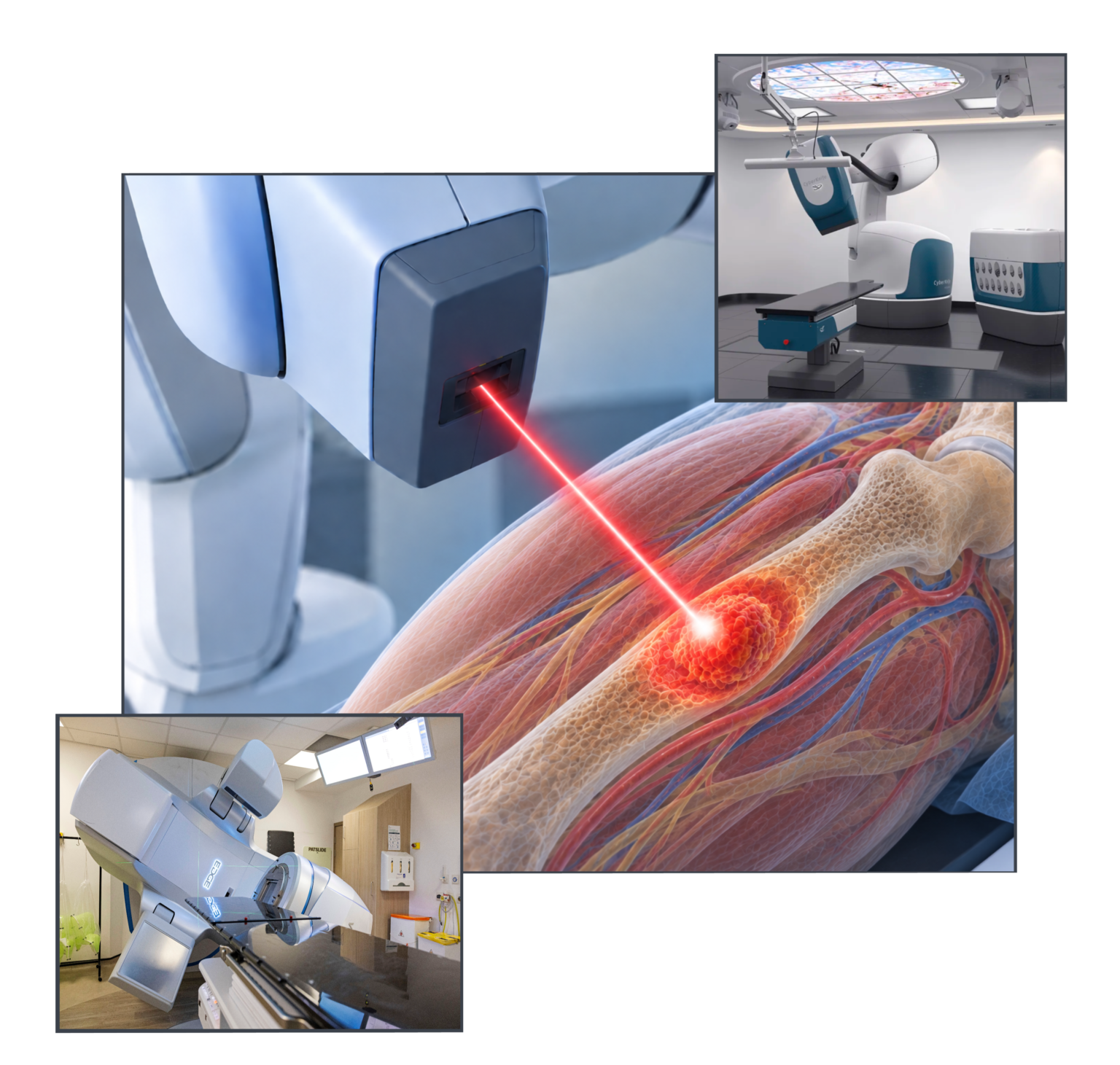
SABR is a specialised radiotherapy technique used to treat selected bone metastases with a higher, more concentrated dose than standard palliative radiotherapy. It relies on detailed imaging and precise positioning to target the affected bone while limiting exposure to surrounding tissue.
This approach may be considered when a bone metastasis is well defined, particularly in patients with a limited number of metastases or a good overall prognosis.
Treatment is delivered using one of three systems:
- CyberKnife: flexible positioning for confined locations
- Linear Accelerator (Linac): image-guided beams shaped to the tumour
- MR-Linac: live MRI tracking during treatment delivery
THE BENEFITS OF SABR FOR Bone METASTASES
The Advantages Of SABR For Secondary Bone Cancer
For bone metastases, SABR is most relevant when one area needs careful local treatment and the patient is well enough for a more active approach.
The benefit is not simply convenience. It is the ability to treat a selected lesion with a clear purpose, such as improving local control, reducing future problems at that site, or helping manage symptoms. It may be considered alongside drug treatment, bone-strengthening treatment, surgery or standard radiotherapy.
The decision depends on what the scans show, how the bone is behaving, and what the wider cancer treatment is trying to achieve for that individual patient right now.
- Higher, Targeted Dose
SABR delivers a stronger, focused dose to the tumour while reducing exposure to nearby healthy tissue.
- Short Treatment Course
Treatment is usually completed in a small number of sessions rather than daily visits over several weeks.
- No Surgical Recovery
Treatment does not involve an incision, general anaesthetic or inpatient stay.
- Outpatient Delivery
Most patients attend for treatment and go home the same day.
- Minimal Disruption To Daily Life
Because sessions are few, SABR rarely requires a long pause in other cancer treatments.
- Protects Nearby Structures
Dose limits are set around organs, nerves and healthy bone close to the target.
Is SABR Right for You
When SABR Could Be Considered For Cancer In The Bone
SABR is a selective option for bone metastases. It is not automatically recommended because a metastasis is painful or visible on a scan. The decision depends on whether focused radiotherapy is likely to be useful, safe and proportionate within the wider cancer plan.
- A Defined Lesion Needs Local Control
SABR may be considered when one bone metastasis is clearly visible and local treatment has a specific aim.
- Cancer Has Spread To A Limited Number Of Sites
SABR is usually more relevant when metastatic disease is limited, rather than widespread across many bones or organs.
- One Area Is Progressing
If one bone metastasis is growing while other disease remains controlled, SABR may help treat that site directly.
- The Bone Is Stable Enough For Radiotherapy
SABR may be considered when the bone can be treated safely and does not need urgent surgical stabilisation.
- The Area Has Had Radiotherapy Before
Further radiotherapy may be possible in selected cases, but the previous dose must be reviewed carefully first.
- The Wider Cancer Picture Supports SABR
SABR is more relevant when the overall disease pattern, current treatment and prognosis support a focused approach.
SIDE EFFECTS OF SABR FOR BONE METASTASES
Possible Side Effects After Targeted Bone Radiotherapy
SABR is usually painless while it is being delivered. Side effects can appear in the days or weeks after treatment, and they depend on which bone is treated and what nearby tissues are exposed to radiation.
Pain relief is not always immediate. Macmillan notes that bone pain may start improving after 7 to 10 days, but it can take up to 6 weeks to feel the full benefit. Pain can also briefly worsen before improving.
Short-Term Effects
- Temporary increase in bone pain
- Fatigue or reduced energy
- Local tenderness in the treated area
- Mild skin reaction if the bone is close to the skin
- Feeling sick if treatment is near the ribs or spine
- Loose stools if the pelvis is treated
Longer-Term Effects
- Pain that persists or returns
- Fracture in bone already weakened by cancer
- Ongoing stiffness or reduced use of the affected area
- Further treatment needed if pain returns
- Surgical review if the bone becomes unstable
- Late effects linked to the treated body site
Most side effects are manageable, but sudden severe pain, difficulty walking, weakness, numbness or bladder or bowel changes should be checked urgently.
We are recognised by all major UK private health insurers. Depending on your policy, SABR treatment may be fully or partly covered.
- AXA
- BUPA
- WPA
- Aviva
- Vitality
- Cigna
If you are self-funding, you can move ahead without waiting for insurer approval. You will receive the full treatment cost before deciding.
- Time To Decide
- Clear inclusions
- Klarna Accepted
Whether you travel for a consultation or treatment, the team supports each step from first review to follow-up.
- Online consultation
- Scan assessment
- Treatment Scheduling
Payment Options For SABR Treatment
Clear Ways To Pay For SABR Treatment
Private cancer care should feel clear, considered and within reach. We work with major private health insurers, support patients who choose to self-fund, and welcome people travelling to the UK for specialist SABR treatment.
Once your consultation has taken place and the recommended plan is clear, the team will talk you through the available payment options before you decide whether to proceed.
Getting started
How SABR Treatment For Bone Metastases Works
Each stage helps you understand whether SABR is the right option, from reviewing your scans and bone stability to planning treatment and checking your response afterwards.
Contact us by phone, email or the enquiry form on this page. No referral is needed. The team will respond within one working day to discuss your situation and next steps.
Meet with a SABR specialist in person or by video call to review your scans, discuss your medical history and understand your treatment options clearly.
If SABR is recommended, any further imaging needed is arranged so the team has a complete picture of the disease before planning starts.
Your treatment plan is designed around your specific tumour, using detailed imaging and 4D CT planning, before the full clinical team signs it off.
Treatment is delivered over one to eight short outpatient sessions. Each session is entirely painless and most patients drive themselves home the same day.
Follow-up scans and clinical review check response over time and guide the next steps in your care.
Will SABR reduce my bone pain?
Pain relief is one of the recognised benefits of radiotherapy to bone metastases. SABR may help reduce localised bone pain in suitable patients, though the degree and timing of relief varies. Some patients notice improvement within weeks; others take longer to respond.
Can I continue systemic treatment during SABR?
In many cases, systemic treatments such as hormone therapy or targeted drugs can continue alongside SABR. Whether chemotherapy or immunotherapy needs to be paused depends on the specific drugs involved and the area being treated. This is reviewed as part of your treatment plan.
Is there a risk of fracture after SABR to a bone metastasis?
Vertebral compression fracture and fracture at other treated bone sites are recognised risks after SABR, particularly when the bone has already been weakened by disease. The risk varies depending on the location, bone density and the dose used. This is assessed during planning and discussed with you before treatment.
Should I continue bone-strengthening medication during SABR?
Bisphosphonates and denosumab are commonly used in patients with bone metastases to reduce the risk of skeletal complications. There is no standard requirement to stop these before SABR, though the treating team will review your current medications as part of the planning process.
What happens to the bone after SABR treatment?
SABR targets the tumour within the bone rather than repairing the bone itself. In some cases, the treated area stabilises over time as the disease responds. Where structural integrity is a concern, the need for additional measures such as surgical stabilisation or bone-strengthening medication is reviewed alongside the radiotherapy plan.
Frequently Asked Questions
We Know You Have Questions. Here Are The Honest Answers.
When you are facing cancer treatment, every question matters. The answers below cover what patients most often ask us, but they are only a starting point.
If you are unsure about anything, our team will take the time to understand your situation, explain things clearly and help you feel more informed about your options.
Speak to the Team
Connect With Our Clinical Team
Whether you have a specific question or simply want to understand your options, our team will provide clear guidance and an honest assessment of what treatment could look like for you.
You can reach us by filling in the contact form or calling us directly.