
SABR for PANCREATIC cancer in the UK
stereotactic radiotherapy For Selected Pancreatic Cancer Cases
Pancreatic cancer treatment can feel difficult to navigate, especially if surgery is not possible or chemotherapy has been the main option offered. In some cases, treating the pancreatic tumour directly can still be part of the plan.
SABR is a focused radiotherapy treatment used for selected patients with pancreatic cancer. It can be used after chemotherapy for locally advanced disease, where surgery is not suitable, for isolated local recurrence, or to help manage symptoms such as pain, bleeding or obstruction.
Primary and secondary cancer
Non-Surgical Treatment
Outpatient Treatment
WHAT IS PANCREATIC CANCER?
What You Need to Know About Pancreatic Cancer Before Treatment
Pancreatic cancer develops in the pancreas, an organ that lies deep in the abdomen behind the stomach. It makes digestive enzymes and hormones, including insulin. Because of its position, pancreatic cancer can be difficult to detect early and may not cause clear symptoms at first.
Some pancreatic cancers are found while still suitable for surgery. Others are described as borderline resectable, locally advanced, unresectable or metastatic, depending on how far the tumour has grown or spread. These details matter because they guide whether treatment involves surgery, chemotherapy, radiotherapy, supportive care or a combination.
Common Symptoms Of Pancreatic Cancer
- Yellowing of the skin or whites of the eyes
- Dark urine or pale, greasy stools
- Upper abdominal pain that may spread to the back
- Loss of appetite or feeling full quickly
- Nausea or vomiting
- New or worsening indigestion
- New-onset diabetes or worsening blood sugar control
- Diarrhoea, constipation or other stool changes
The main types of Pancreatic cancer
Pancreatic ductal adenocarcinoma
Pancreatic neuroendocrine tumours
Acinar cell carcinoma
Adenosquamous carcinoma
Types Of Secondary Pancreatic Cancer
- Kidney cancer
- Lung cancer
- Colorectal cancer
- Breast cancer
- Melanoma
- Sarcoma
PANCREATIC cancer TREATMENT OPTIONS
treatment options for primary and Metastatic Pancreatic Cancer
Stereotactic Radiotherapy (SABR)
SABR is a focused radiotherapy treatment used in selected pancreatic cancer cases. It can help target the primary tumour when surgery is not suitable, or support local control after chemotherapy in locally advanced disease.
Surgery
Surgery is used when pancreatic cancer can be removed safely. The operation depends on where the tumour is in the pancreas and is usually followed by chemotherapy once you have recovered.
Chemotherapy
Chemotherapy is used after surgery to reduce the risk of recurrence, and as a main treatment for locally advanced or metastatic pancreatic cancer. Treatment choice depends on fitness, performance status and previous treatment.
Chemoradiotherapy
Chemoradiotherapy combines radiotherapy with chemotherapy, often capecitabine, to make cancer cells more sensitive to radiation. It can be used for selected locally advanced pancreatic cancers.
Targeted Treatment
Targeted treatment is only suitable for a small number of patients whose cancer has specific molecular changes, such as an NTRK gene fusion. Testing helps identify whether this applies.
WHAT IS SABR TREATMENT FOR PANCREATIC CANCER
A Targeted Way To Treat The Pancreatic Tumour Directly
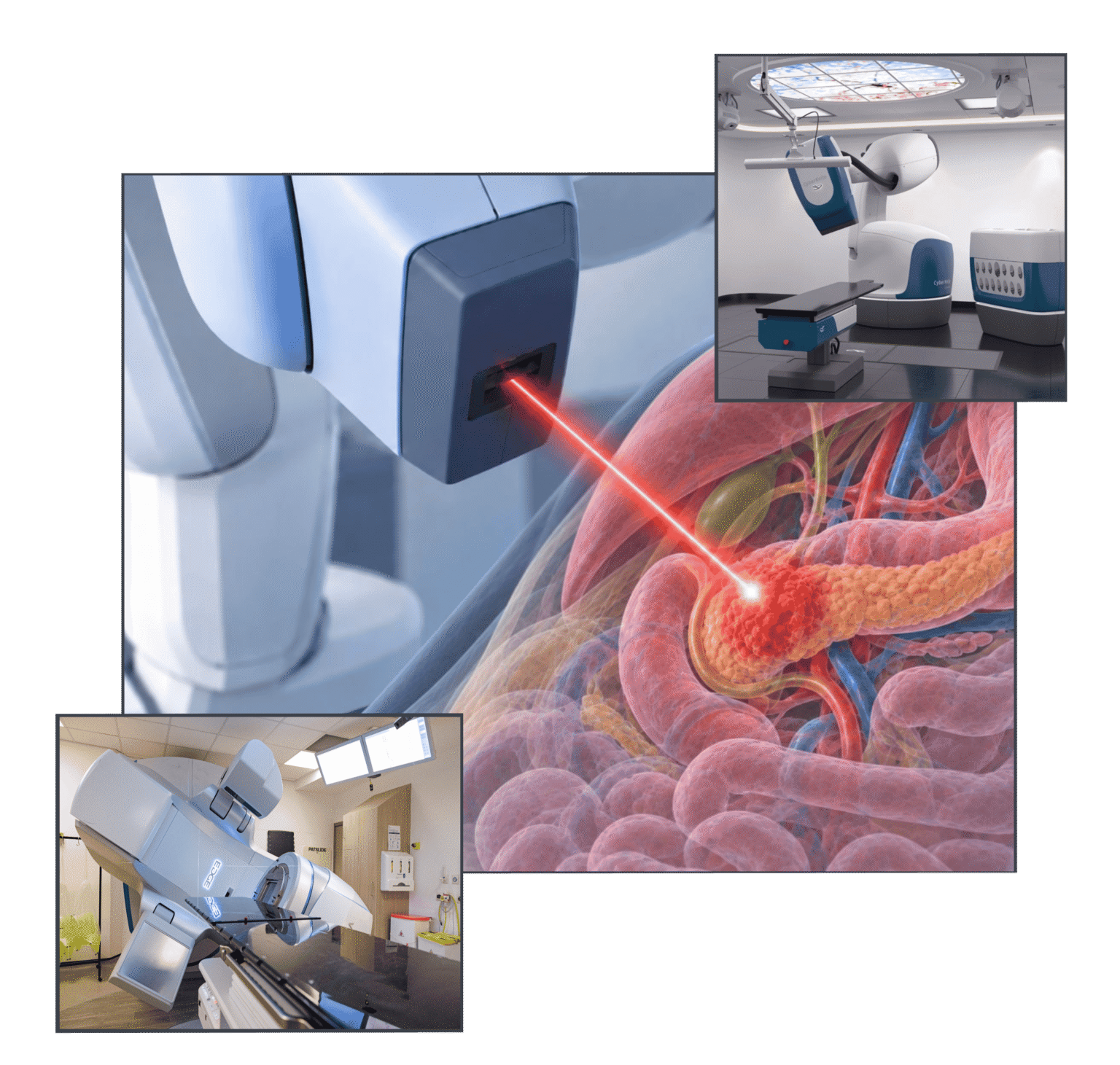
SABR, also known as stereotactic body radiotherapy, uses precise radiation planning to treat a defined pancreatic tumour while limiting dose to surrounding healthy tissue. It is usually delivered in fewer sessions than conventional radiotherapy.
In pancreatic cancer, accuracy is essential. The treatment plan must account for the tumour’s position, breathing movement and nearby organs such as the duodenum, stomach and small bowel. SABR is used in carefully selected cases, including locally advanced disease after chemotherapy, inoperable tumours, isolated recurrence and symptom control.
- CyberKnife: robotic delivery from multiple treatment angles
- Linear Accelerator (Linac): precise radiotherapy shaped around the target
- MR-Linac: MRI guidance during treatment planning and delivery
THE BENEFITS OF SABR FOR PANCREATIC CANCER
Why Patients Consider SABR Treatment For Pancreatic Cancer
Pancreatic cancer often sits close to the stomach, small bowel, liver, bile duct and major blood vessels, which makes treatment planning particularly important. SABR can offer a focused radiotherapy option for selected patients where local tumour control is part of the treatment aim.
It is used in specific pancreatic cancer situations, including locally advanced disease after chemotherapy, medically inoperable tumours, isolated local recurrence, oligometastatic or oligoprogressive disease, and symptom control. Suitability depends on the tumour’s position, previous treatment and whether nearby organs can be protected safely.
- Shorter Treatment Course
- Delivered Without Surgery
- No Hospital Admission
- Used After Chemotherapy
- Protects Sensitive Nearby Organs
- Can Help With Symptoms
Is SABR Right for You
When Pancreatic SABR Can Become Part Of The Plan
-
Your Cancer Is Locally
Advanced
- Chemotherapy Has Helped Control The Disease
-
An Operation Carries Too
Much Risk
- The Cancer Has Returned In The Pancreas Area
- One Or A Few Areas Are Progressing
- The Tumour Is Causing Symptoms
SIDE EFFECTS OF PANCREATIC SABR
What You May Notice During And After SABR Treatment
Side effects from pancreatic SABR depend on the tumour’s position, the dose delivered and how close the treatment area is to the stomach, duodenum, small bowel and other nearby organs. Because the pancreas sits deep in the abdomen, treatment is planned carefully to reduce radiation exposure to healthy tissue.
Your specialist team will explain which side effects are most relevant to your treatment plan, how they can be managed, and which symptoms should be reported after treatment.
Short-Term Effects
- Fatigue or reduced energy
- Nausea or vomiting
- Reduced appetite
- Indigestion or reflux symptoms
- Abdominal pain or discomfort
- Loose stools or diarrhoea
Longer-Term Effects
- Fatigue lasting several weeks
- Ongoing digestive symptoms
- Persistent abdominal discomfort
- Skin darkening or sensitivity
- Rare bowel irritation or injury
- Rare bleeding or ulceration near the stomach or bowel
- AXA
- BUPA
- WPA
- Aviva
- Vitality
- Cigna
- No Obligation
- Clear Pricing
- Klarna Accepted
- Remote Review
- Treatment Planning
- Appointment Support
Payment And Insurance Options For SABR
Accessible Treatment Options For Pancreatic Cancer SABR
When treatment decisions feel urgent, costs should still be explained calmly and clearly. After your consultation, you will be told what has been recommended, what is included and what needs insurer approval if you are using private medical cover.
This helps you make an informed decision before any SABR treatment is scheduled.
Getting started
Your Journey To SABR Treatment for Pancreatic Cancer
Will I need a new planning scan before SABR?
Can pancreatic SABR be given at the same time as chemotherapy?
Can pancreatic SABR be repeated?
What happens if the tumour is too close to the stomach or bowel?
What information is needed before pancreatic SABR can be reviewed?
Frequently Asked Questions
We Know You Have Questions. Here Are The Honest Answers.
When you are facing cancer treatment, every question matters. The answers below cover what patients most often ask us, but they are only a starting point.
If you are unsure about anything, our team will take the time to understand your situation, explain things clearly and help you feel more informed about your options.
Speak to the Team
Connect With Our Clinical Team
Whether you have a specific question or simply want to understand your options, our team will provide clear guidance and an honest assessment of what treatment could look like for you.
You can reach us by filling in the contact form or calling us directly.